

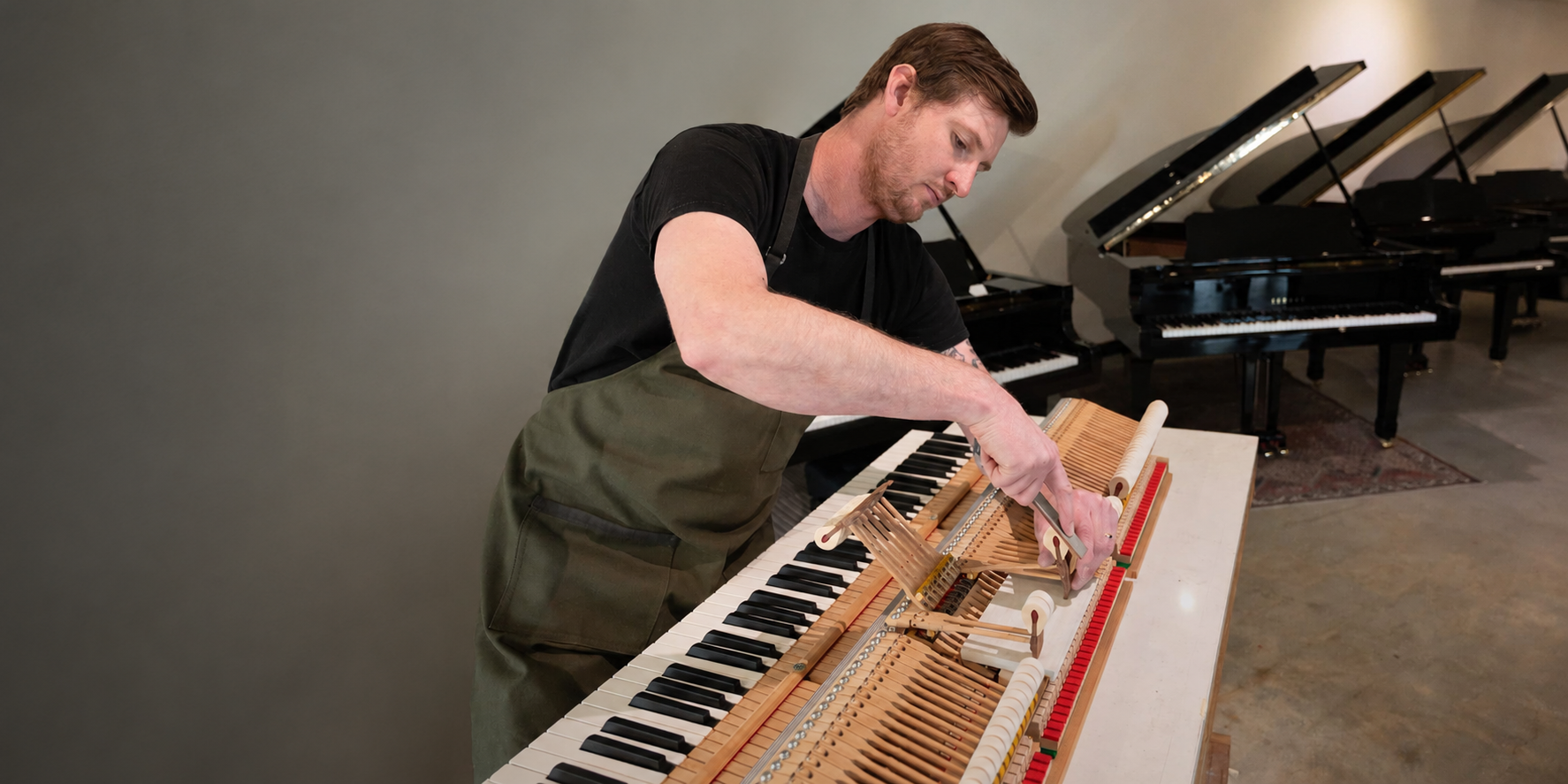
Our Refurbishing Process
Bringing Each Piano We Sell To It’s Fullest Potential.
Striving For Perfection,
Cosmetically. Mechanically. Sonically.
Our Refurbishing Process
For many years, nearly every piano sold through Seattle Piano Company was rebuilt or refurbished entirely in our Seattle shop.
That process involved sourcing pianos locally, performing complete cabinet and action work in-house, regulating the keyboard and action from the ground up, and preparing each instrument individually before sale.
As we began importing Yamaha pianos from Japan, I was genuinely impressed by the level of work coming from our now partner refurbishing facility in Hamamatsu — the birthplace of Yamaha.
The quality of the cabinet work, regulation, detailing, and overall preparation raised the bar for my own standards.
Over time, that evolved into the process we use today.
Seattle Piano Company now operates with a hybrid approach. Many pianos undergo extensive refurbishment in Japan before arriving in Seattle, where every instrument is then inspected, refined, regulated, voiced, and prepared again in our own shop before entering the showroom.
We still perform complete overhauls in-house when appropriate, particularly on older restoration projects, but the majority of our Yamaha inventory now benefits from both stages of preparation: refurbishment in Japan and final refinement in Seattle.
Most importantly, the process begins long before any work takes place.
We are extremely selective about the inventory we bring in and focus heavily on sourcing only exceptionally clean, structurally healthy A+ grade instruments.
That foundation is what allows the final preparation process to produce such consistent results.
Cabinet Detailing & Finish Work
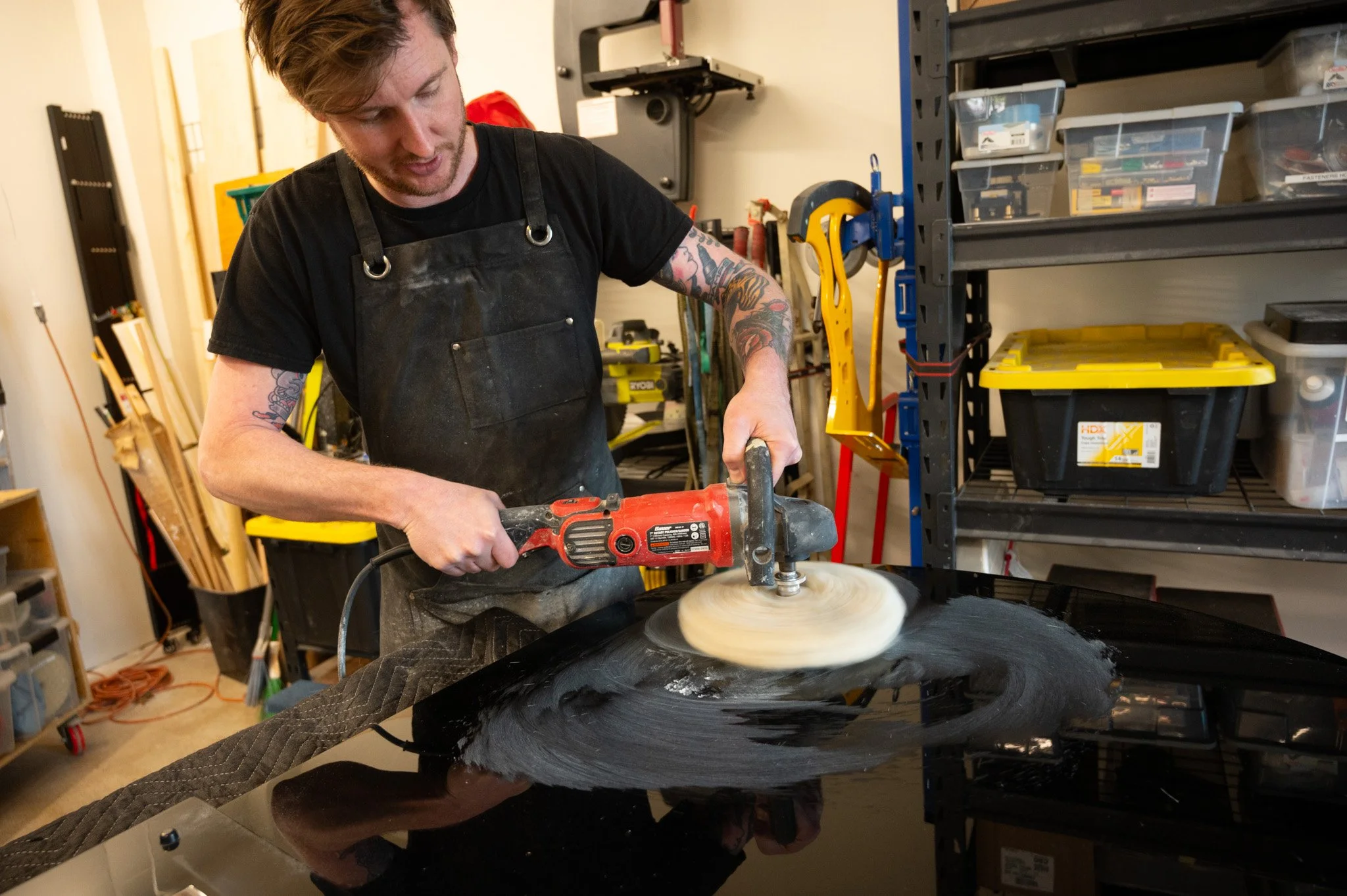
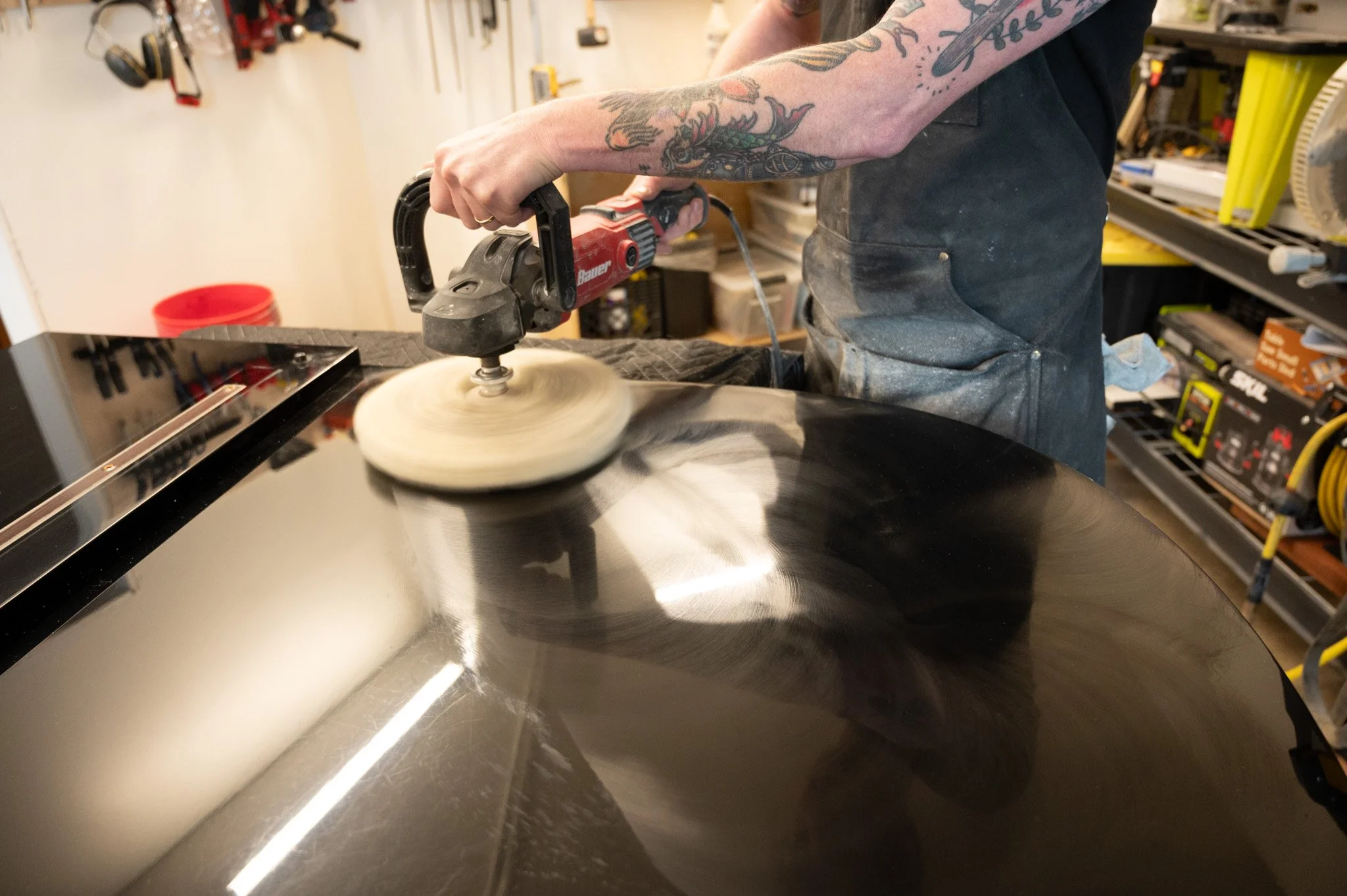
Every piano undergoes extensive cabinet detailing designed to restore the piano’s surface to a seamless, factory-level finish.
- Chip and blemish repair
- Wet sanding to remove surface scratching
- Multi-stage machine polishing and buffing
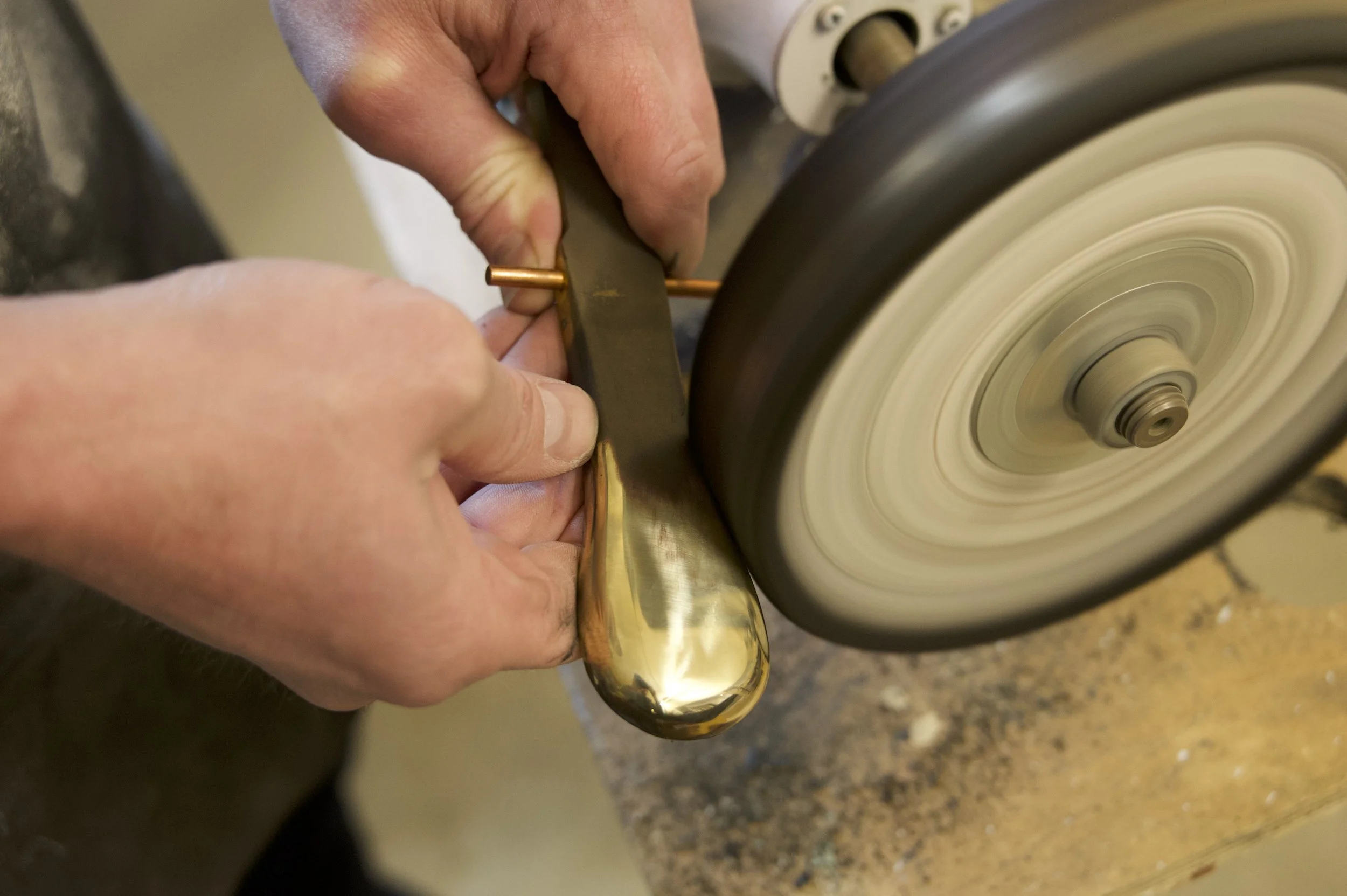
- Brass hardware and pedal polishing
Even pianos that have been kept in exceptionally careful environments will naturally develop light surface wear over time.
Because Yamaha’s polyester finishes are extremely thick and durable, we are often able to wet sand imperfections from the surface and then machine buff the cabinet back to a deep, highly reflective finish without compromising the integrity of the original material.
Factory Yamaha finishes are typically polished using dry compounds, which can leave behind light swirl marks and haze in certain lighting conditions. In both our Seattle shop and our partner refurbishing facility in Japan, the polishing process uses liquid compounds along with multiple pad stages ranging from wool cutting pads to ultra-soft foam finishing pads.
The result is a significantly deeper and more refined finish with dramatically reduced swirl marks and greater clarity throughout the reflection.
Particularly with polished ebony Yamaha pianos, proper finish work dramatically changes how the instrument presents in both natural and showroom lighting. When done correctly, the cabinet regains the deep reflective finish Yamaha grands are known for, often exceeding the presentation of the original factory polish.
Whether the work is completed in Japan or in our Seattle shop, final detailing and inspection are always approached with the same standard in mind: a piano that feels exceptionally clean, refined, and properly cared for throughout.
Strings & Interior Detailing
The interior condition of a piano is just as important as its exterior presentation.
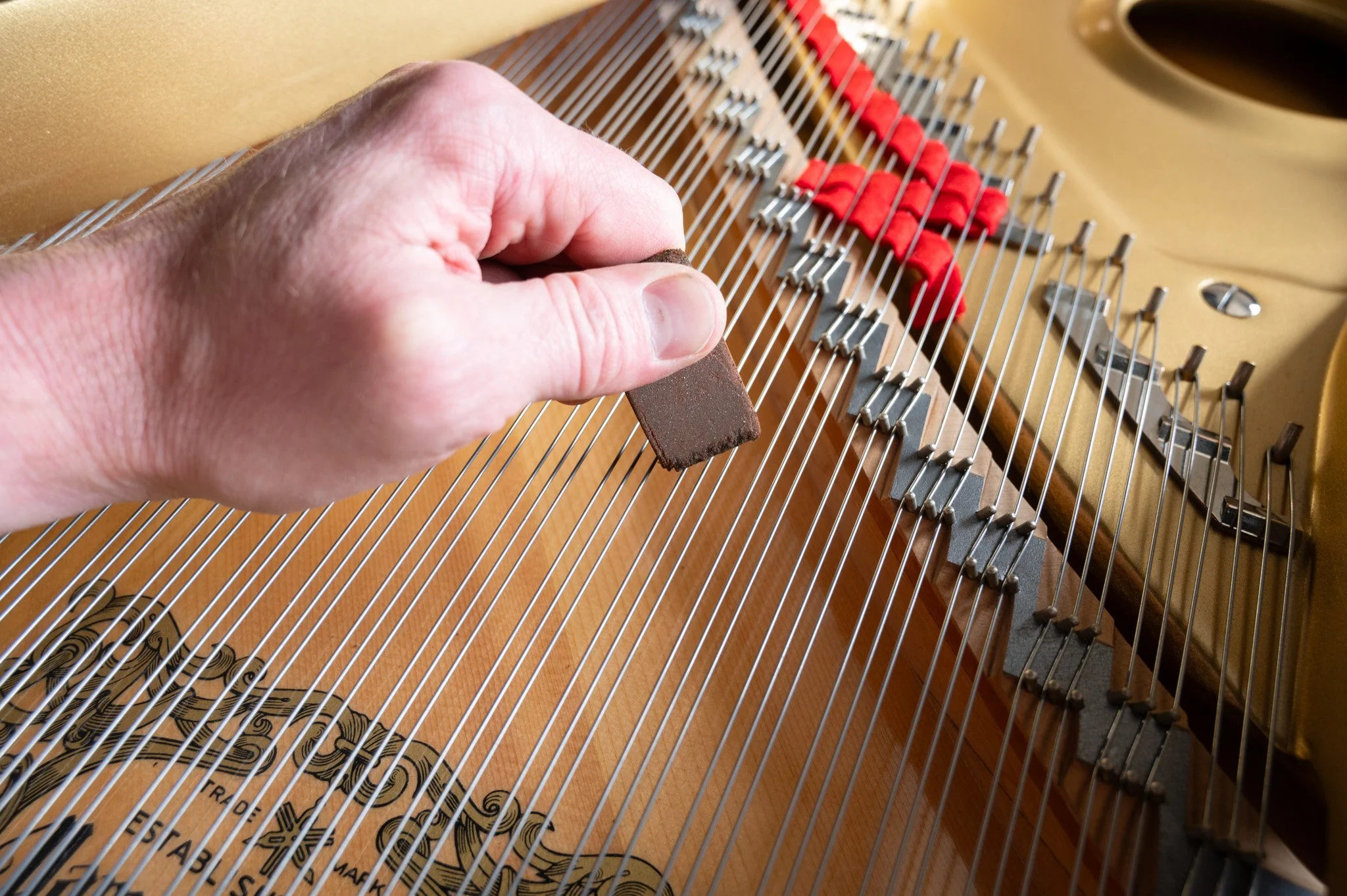
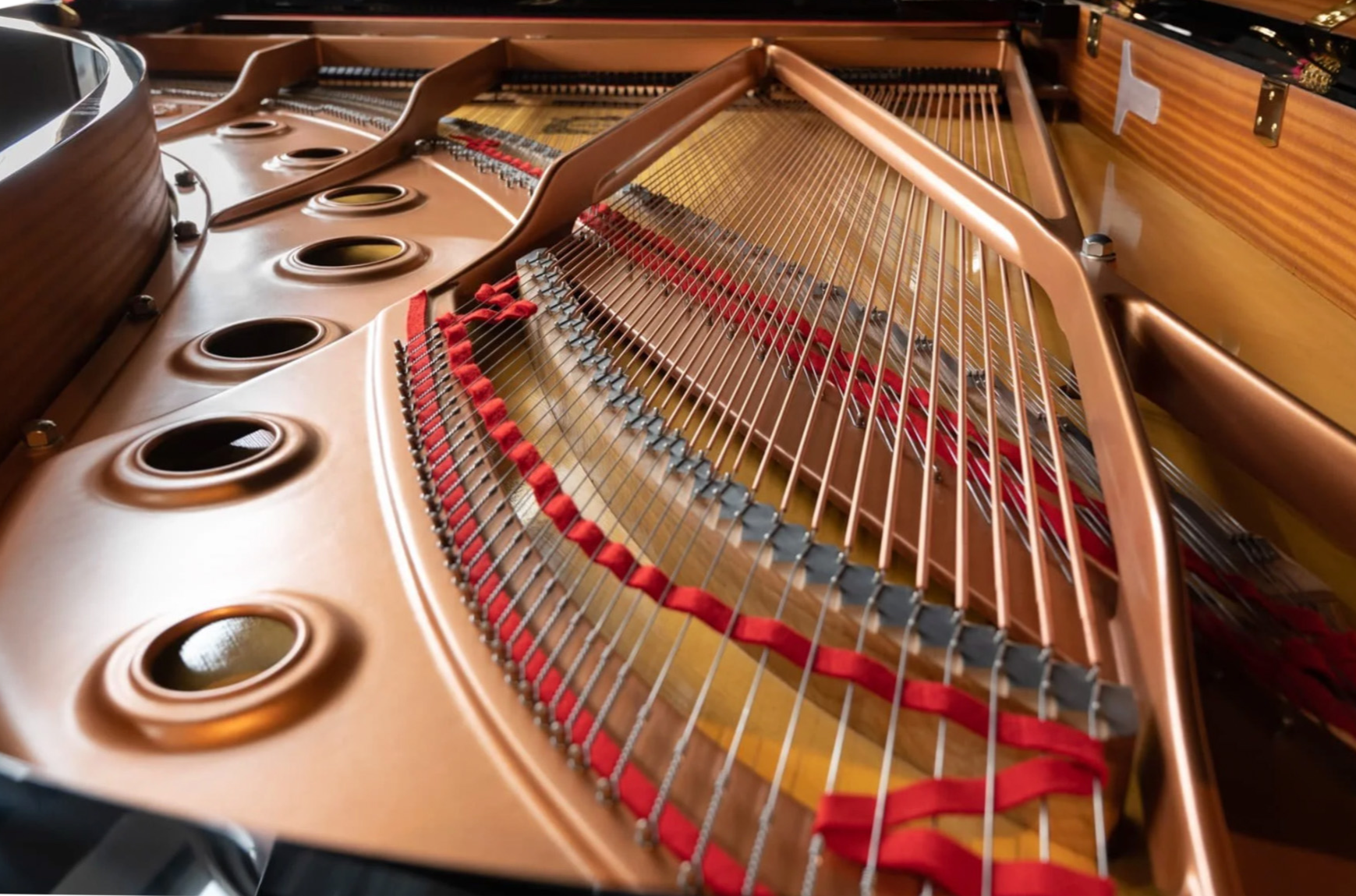
Every instrument undergoes extensive interior cleaning and detailing designed to restore cleanliness, clarity, and consistency throughout the piano itself.
This process includes detailed cleaning of:
- Strings
- Plate
- Soundboard
- Pinfield
- Keybed
- Interior hardware and structural components
Over time, even well-kept pianos naturally accumulate dust, oxidation, and residue throughout the interior of the instrument. Proper cleaning dramatically improves the overall presentation of the piano while also allowing for closer inspection of structural and mechanical condition.
On older restoration projects, the process may also include:
- New strings
- New tuning pins
- New bushings
- New damper felts
- Additional action restoration work as needed, including new hammersets and whippens
While this level of restoration work applies to many piano brands, preserving a clean and stable interior environment is particularly important with Yamaha pianos, where long-term tuning stability, tonal consistency, and precision regulation are such a major part of the instrument’s performance.
Many of the techniques used throughout the refurbishment process have been developed and refined through decades of in-house restoration work. Over time, there has been a natural exchange of ideas and methods between our Seattle shop and our partner refurbishing facility in Japan, with certain processes we developed here now being incorporated into their workflow as well.
Whether completed in Japan or in our Seattle shop, every piano is carefully inspected throughout the process to ensure the instrument meets the standards required for our showroom.
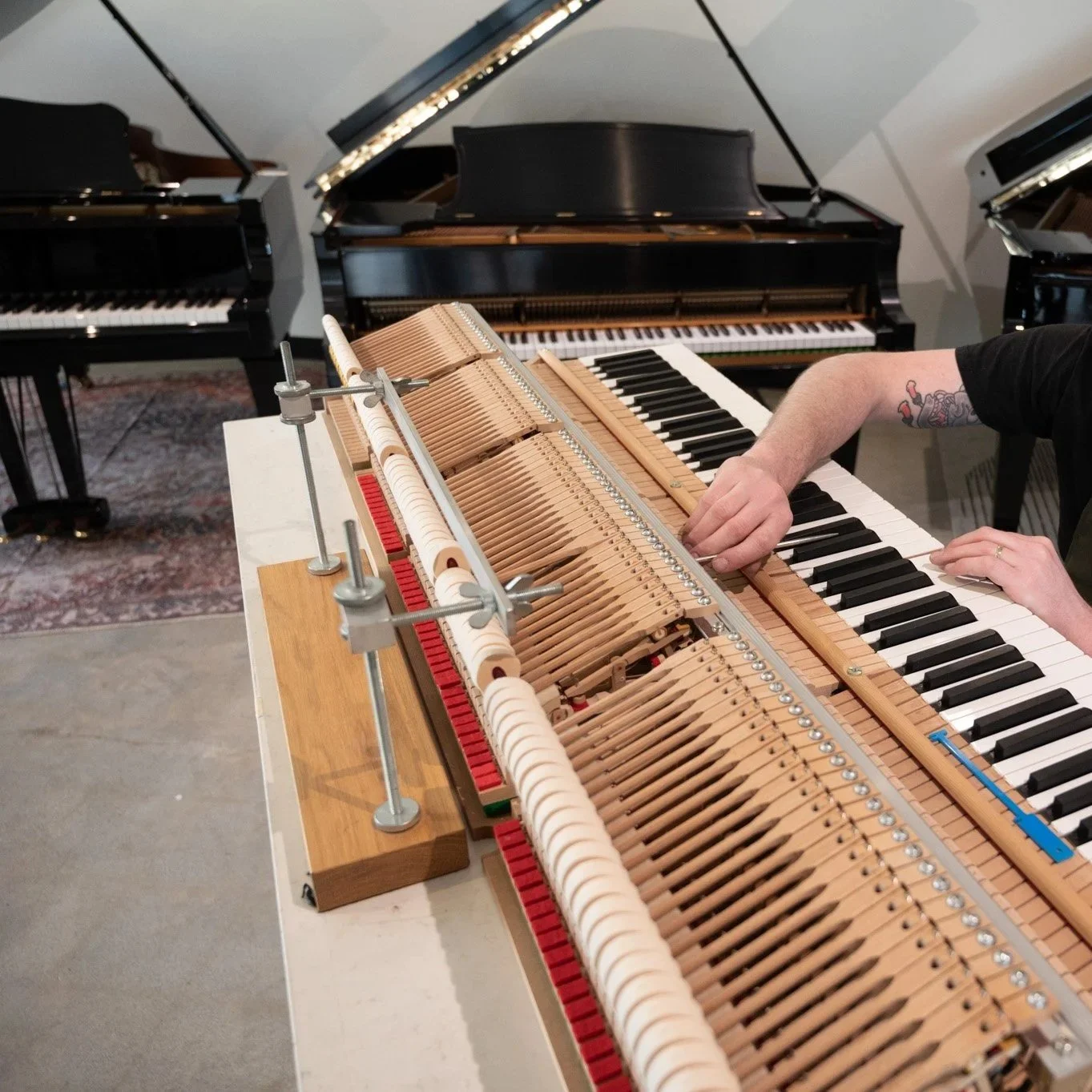
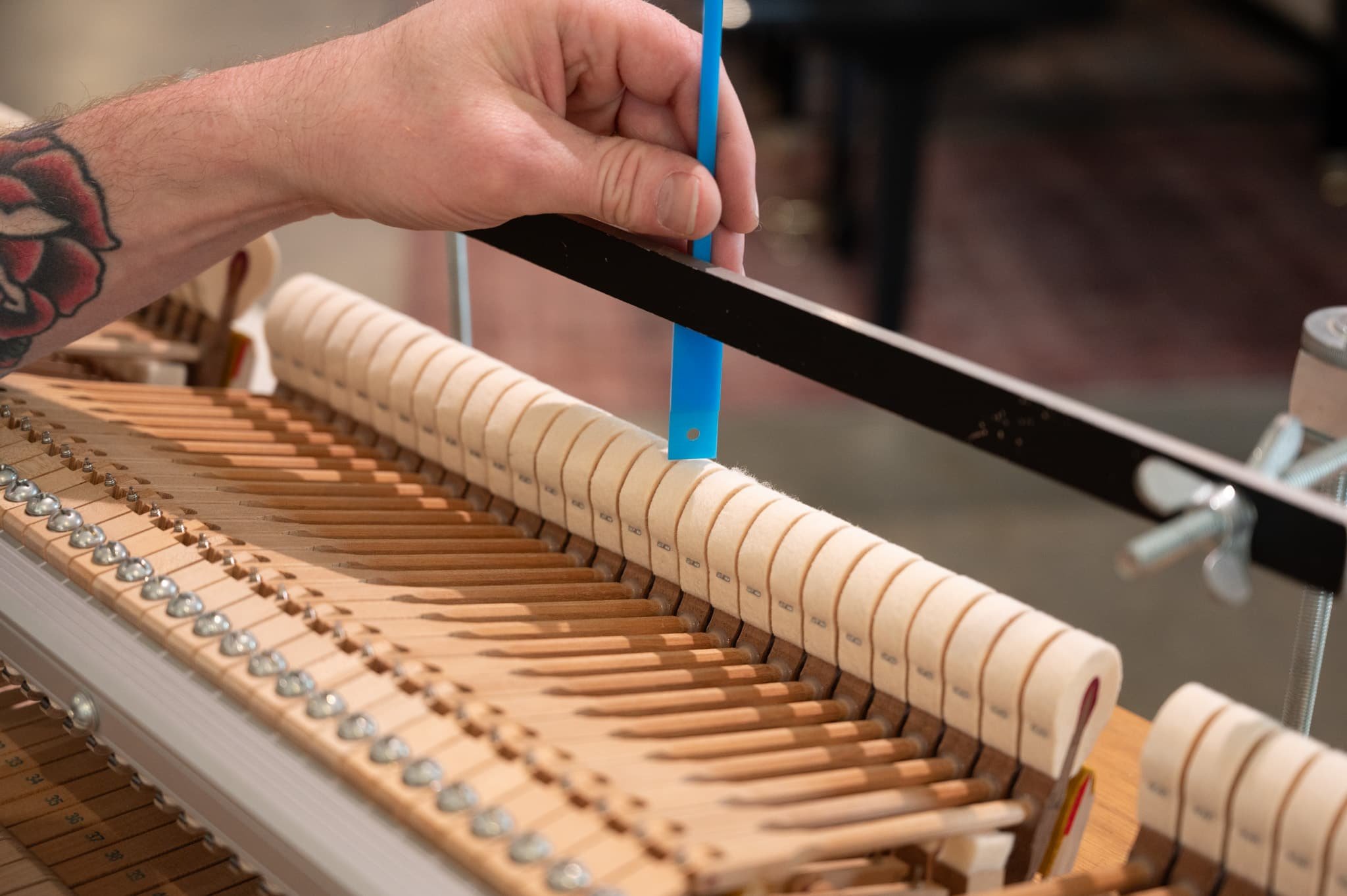
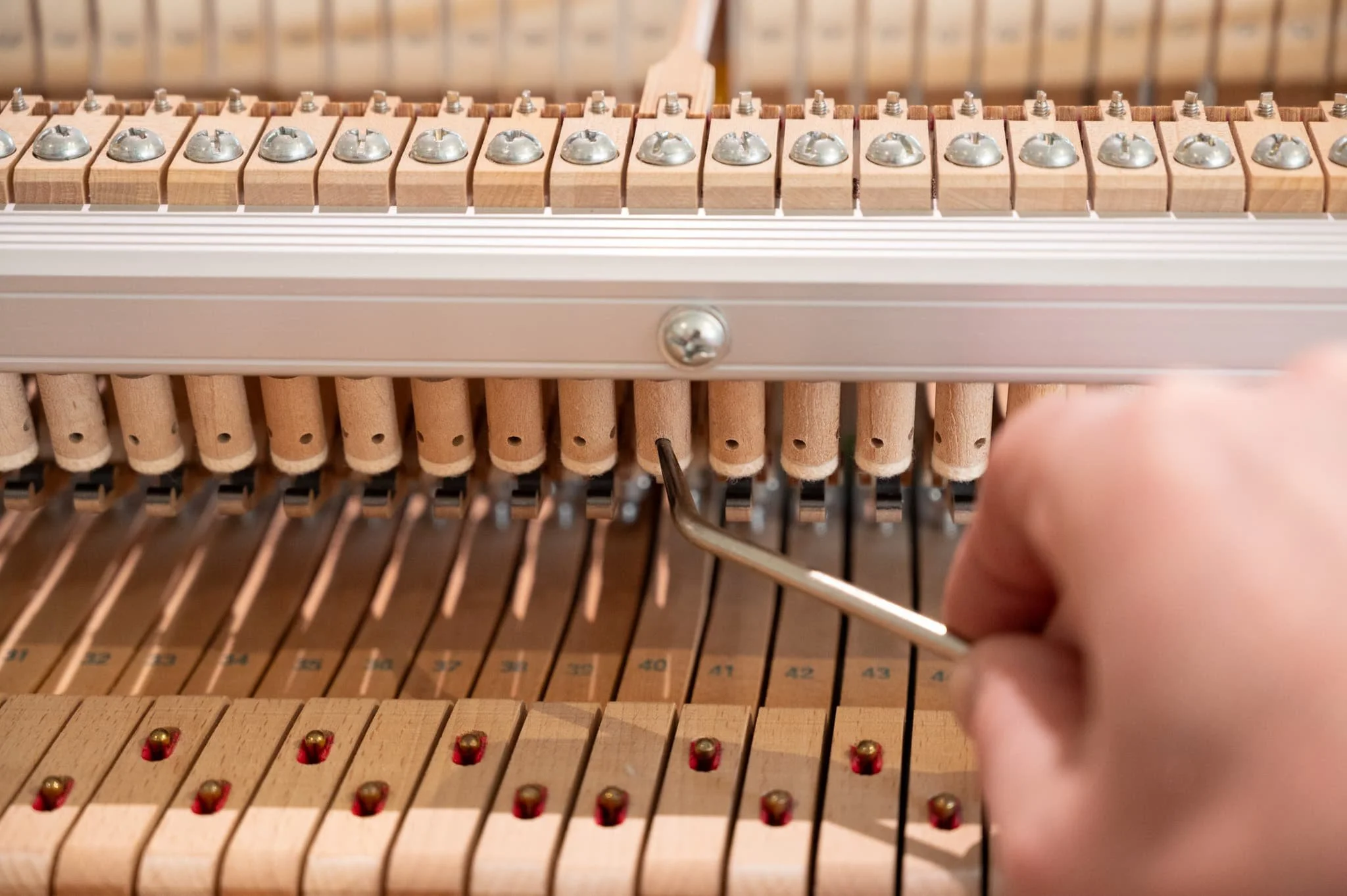
Action Regulation & Hammer Work
The keyboard is the foundation of the piano.
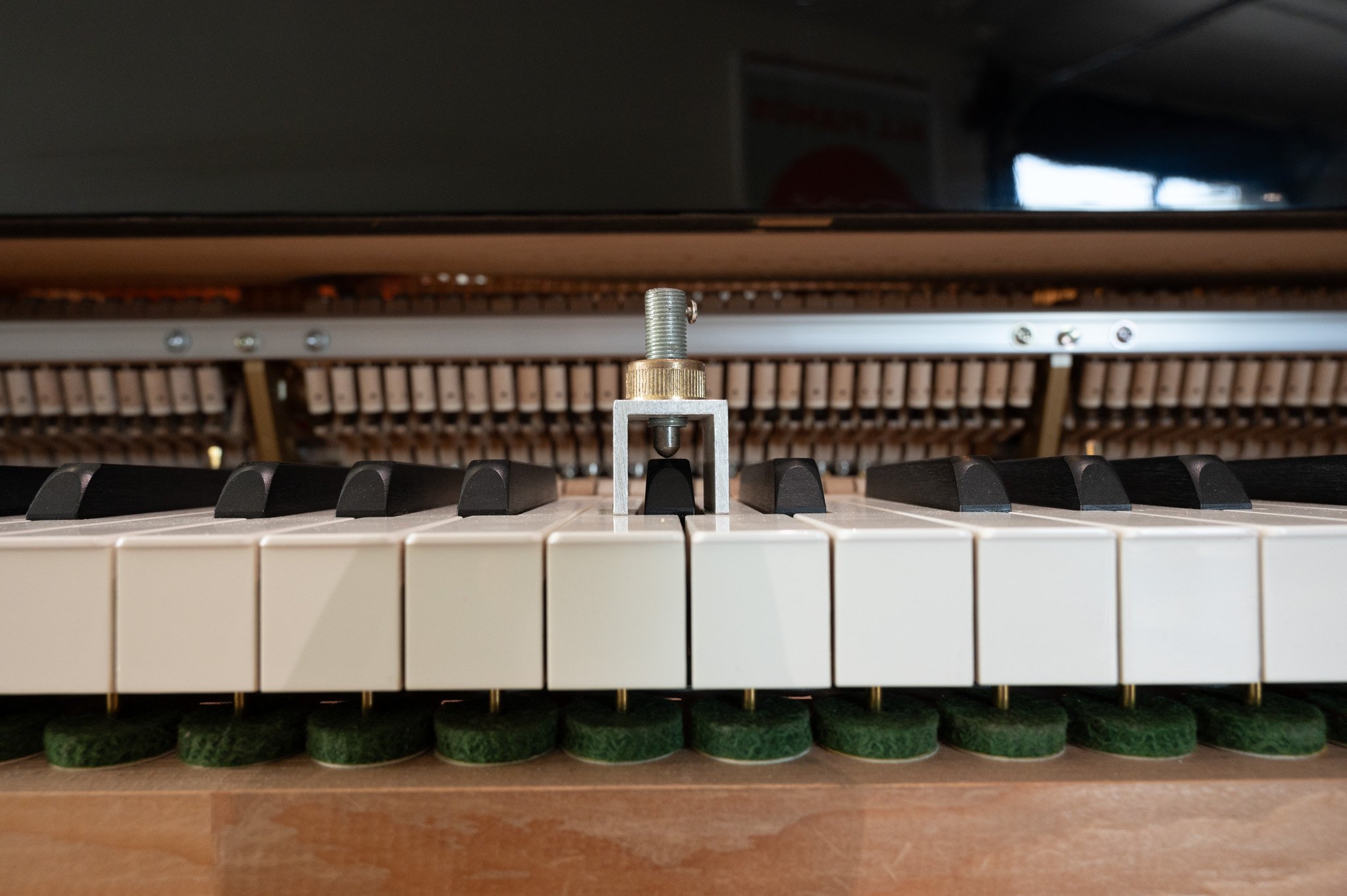
The height of each key along with the exact distance the key travels when pressed is absolutely critical to how the entire action functions and performs. Every movement throughout the action begins at the keyboard itself, and even small inconsistencies can dramatically affect the feel, repetition, and responsiveness of the instrument.
A keystroke that is too shallow may prevent the action from cycling properly, while a keystroke that is too deep can cause the action to overcycle and block itself from repeating notes correctly.
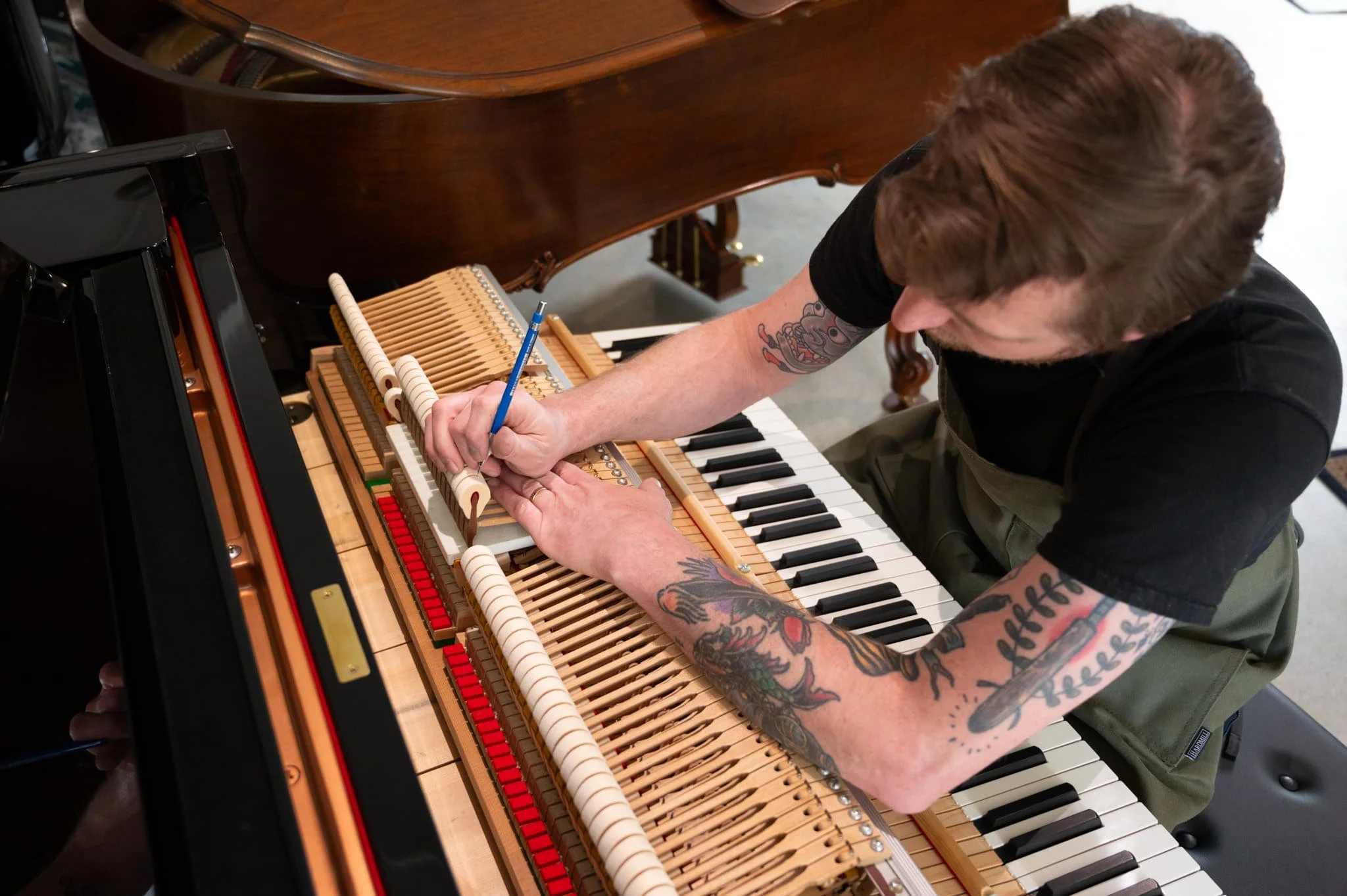
For this reason, every piano undergoes extensive keyboard and action regulation, including:
- Key leveling
- Key dip adjustment
- Hammer alignment
- Hammer shaping
- Let-off regulation
- Drop adjustment
- Repetition regulation
- Checking adjustment
- Pedal regulation
Once the keyboard geometry is properly established, finer adjustments can then be made throughout the action itself.
At our partner refurbishing facility in Japan, several members of the staff are former Yamaha piano factory employees. While the facility itself has no official affiliation with Yamaha, many of the preparation methods and regulation standards implemented throughout the process are directly rooted in Yamaha factory specifications and procedures.
Many technicians and tuners naturally develop their own philosophies and approaches to piano work over time. While we certainly have elements of that ourselves, we are fortunate to also have access to Yamaha factory documentation detailing how these instruments were originally designed to be regulated, voiced, and prepared.
That factory specification becomes the foundation.
From there, small refinements can be made to further improve tonal balance, touch consistency, and overall musical performance.
One area we are particularly selective about in our shop is repetition spring adjustment. If a key feels as though it “knocks” slightly after being played, it is often a sign that the repetition spring tension is too strong. Proper adjustment in this area plays a major role in creating a keyboard that feels smooth, controlled, and consistent throughout the entire instrument.
In many cases, the pianos arriving from Japan are already remarkably accurate in their regulation work. Once the piano arrives in Seattle, every instrument is carefully inspected again, with final touch adjustments, voicing refinement, and tuning performed as needed before entering the showroom.
The result is a piano that not only performs beautifully, but feels controlled, even, and highly consistent throughout the entire keyboard.
Keyboard Detailing & Key Preparation
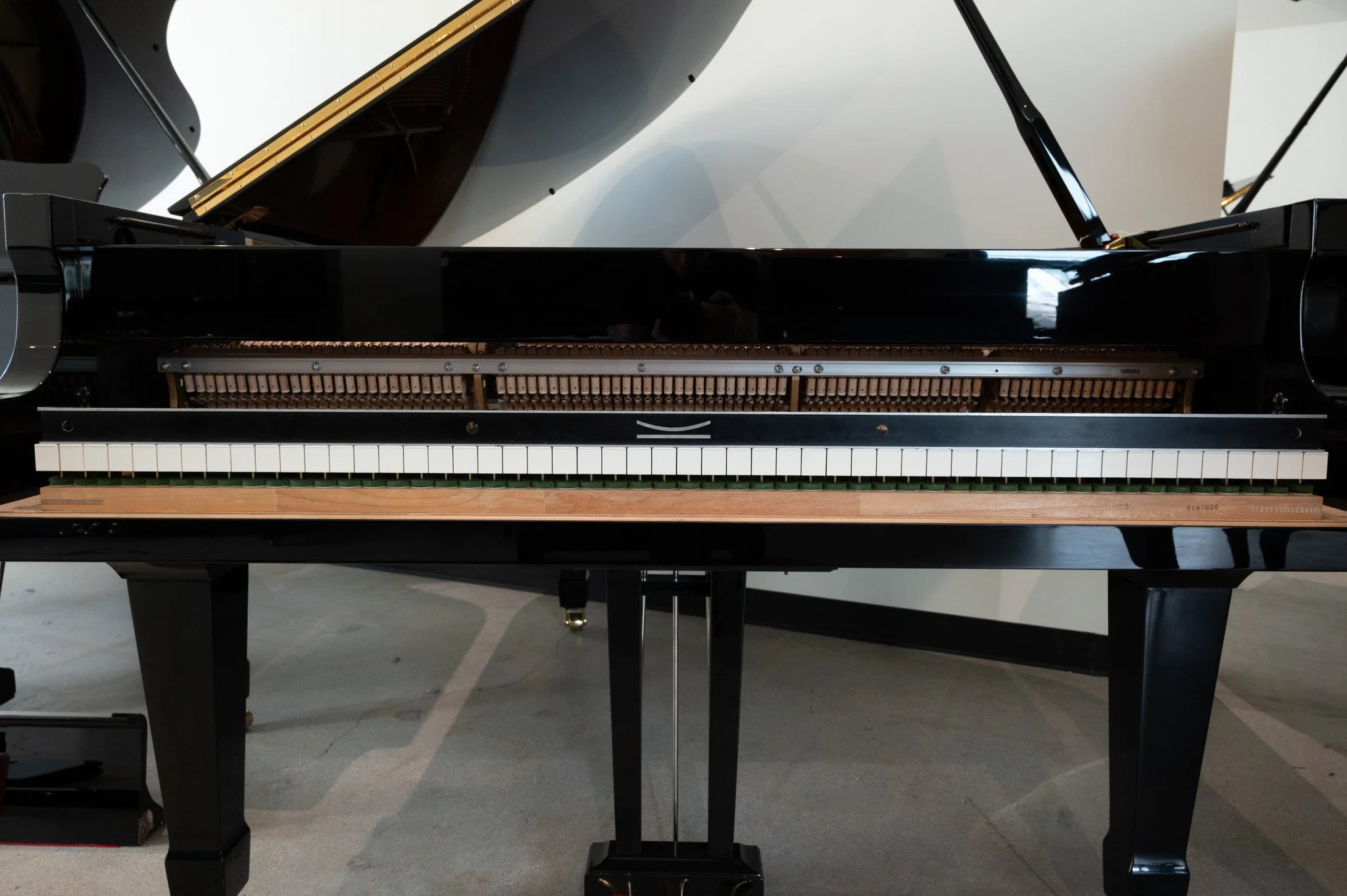
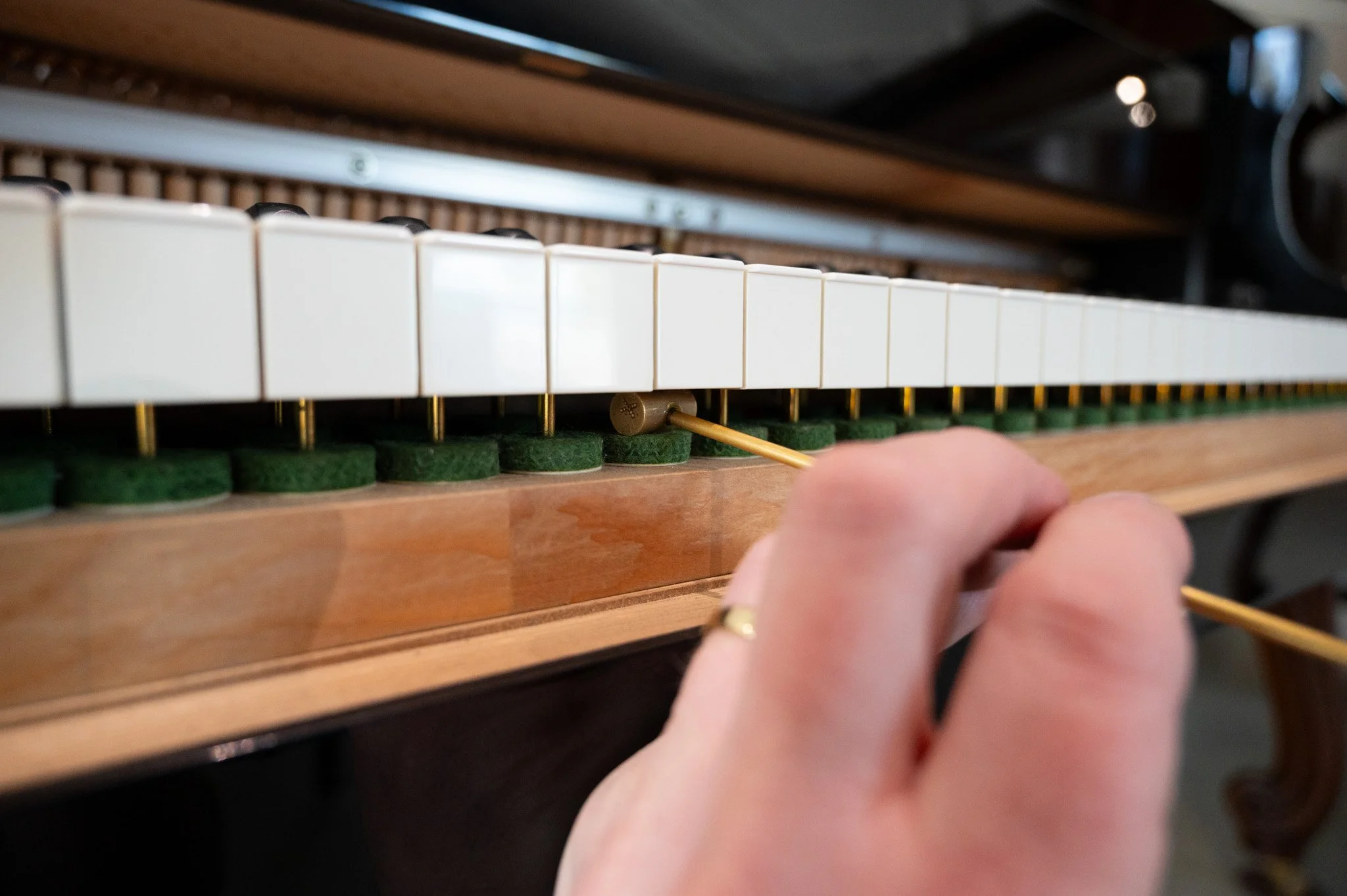
The keyboard is the direct connection between the pianist and the instrument itself. Beyond proper regulation, the keyboard should feel smooth, consistent, quiet, and highly controlled throughout the full range of motion.
Every piano undergoes extensive keyboard preparation and detailing, including:
- Key leveling
- Key easing and travel inspection
- Front rail felt replacement
- Balance rail felt replacement
- Keybed cleaning and detailing
- Key side cleaning
- Machine buffing and polishing of keytops
Particularly on older legacy Yamaha models, many instruments also receive complete new key bushings.
This is an extremely time-consuming process that involves steaming the original bushings out of each individual key, allowing the wood to fully dry and stabilize, and then carefully installing new bushings one key at a time using specialized tooling and precision-fitted felt materials.
When performed correctly, the result is a keyboard that feels dramatically tighter, quieter, smoother, and more precise under the hands.
This level of detail work plays a major role in the overall feel of the instrument and is one of the reasons properly prepared Yamaha pianos tend to feel so controlled and consistent compared to average used instruments.
Whether completed in Japan or in our Seattle shop, every keyboard is carefully inspected and refined to ensure a smooth, even, and highly responsive playing experience throughout the entire instrument.
Tuning, Voicing & Final Preparation
Regulation determines how a piano feels. Voicing determines how it speaks.
Once the mechanical preparation of the piano is complete, final tuning and voicing work help shape the tonal character and overall musical personality of the instrument.
Every piano is carefully tuned and evaluated throughout the preparation process to ensure stability, consistency, and balance across the full keyboard.
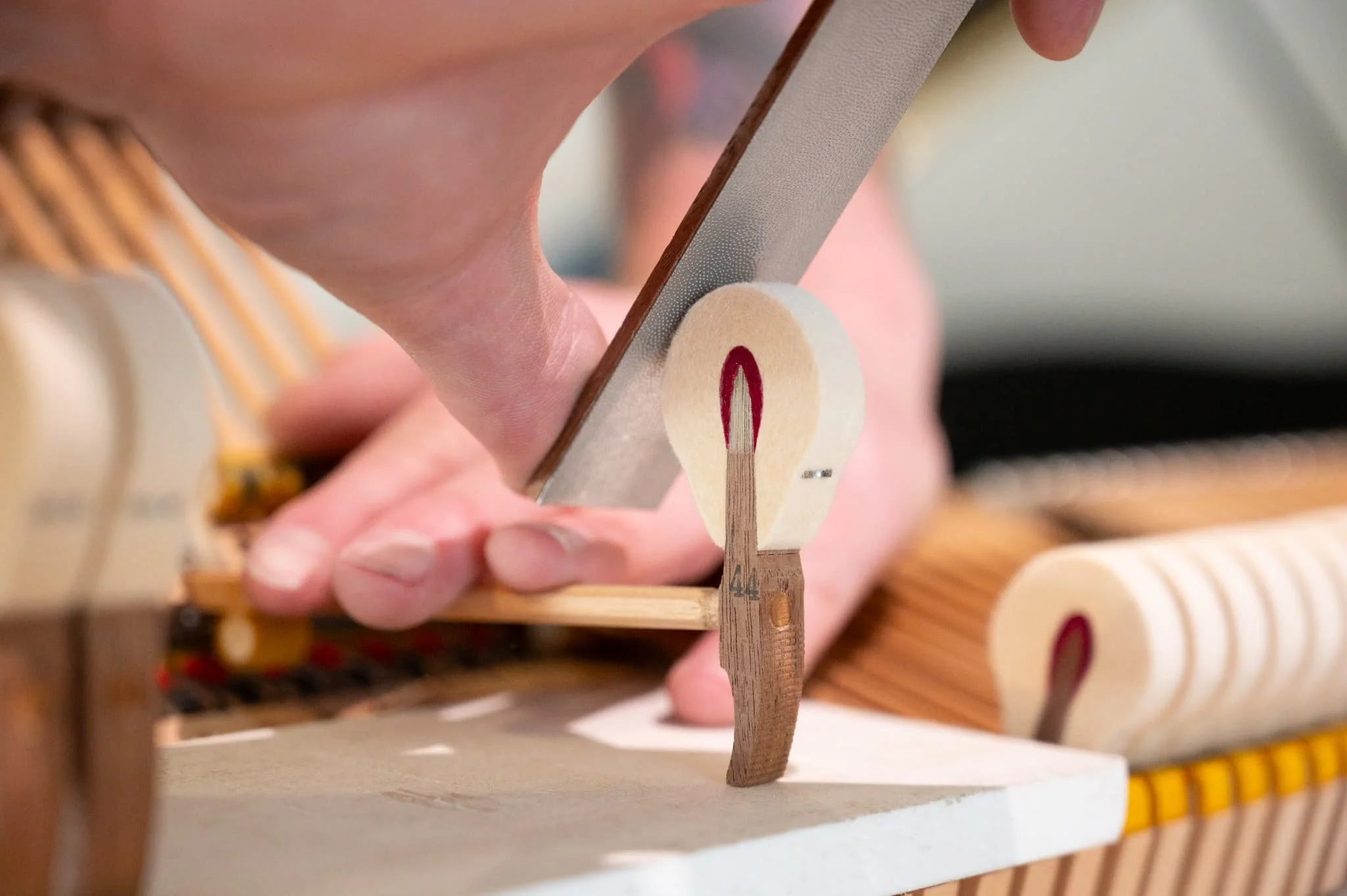
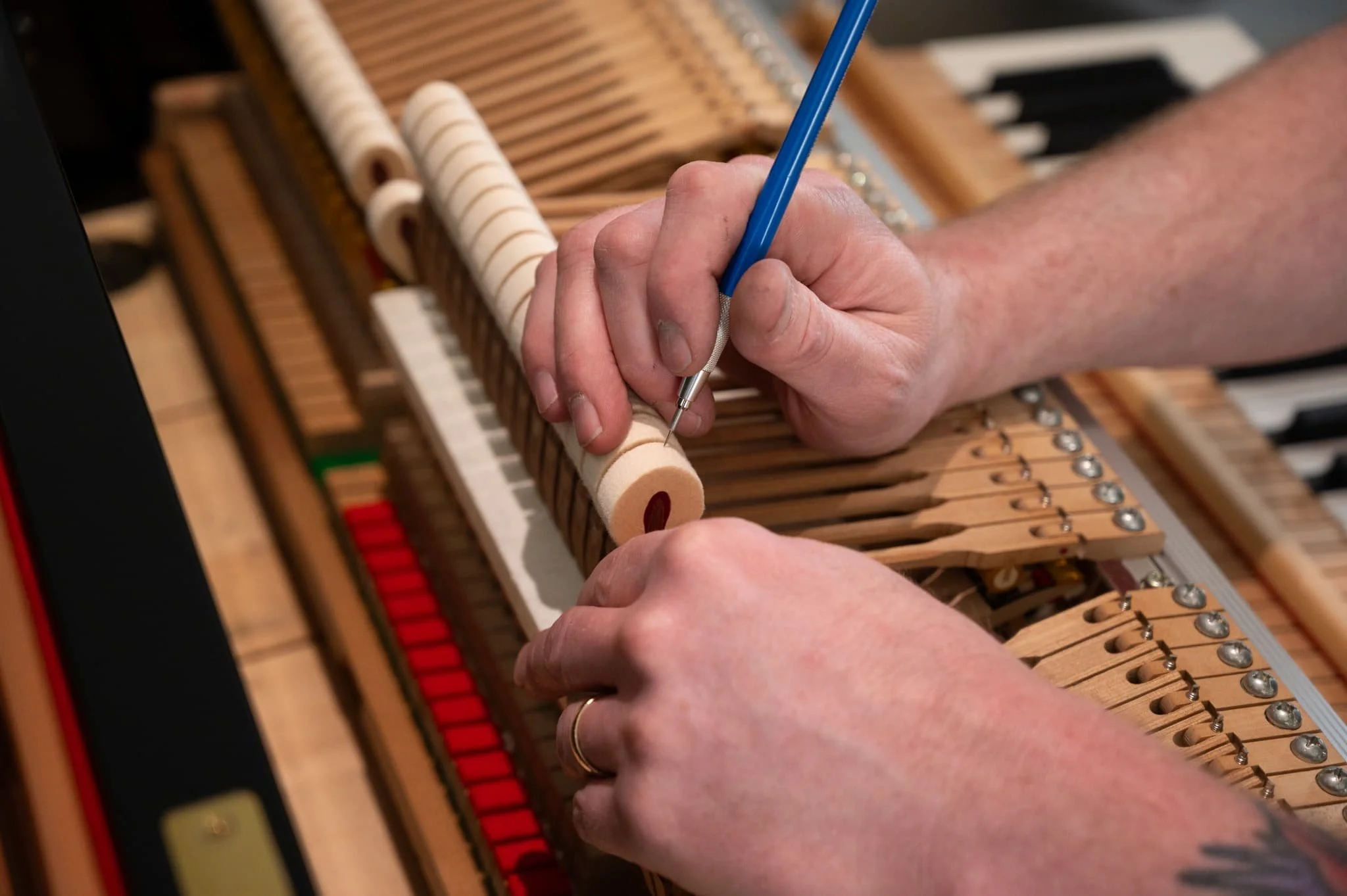
Voicing adjustments are then made as needed to refine the tonal response of the instrument. This may involve:
- Hammer shaping
- Needling
- Tonal balancing
- Brightness reduction
- Improving sustain and tonal consistency between registers
Yamaha pianos respond exceptionally well to careful voicing work, particularly when the action and keyboard have already been properly regulated and refined.
At Seattle Piano Company, our goal is not to force every piano into a single tonal personality. Tone is highly subjective, and different pianists naturally gravitate toward different levels of brightness, warmth, clarity, and attack.
Instead, our approach is to bring out as broad a tonal palette as possible while maintaining balance and control throughout the instrument.
From there, we intentionally leave room for customers to guide us toward their own tonal preferences whenever desired.
In many cases, only small refinements are needed after the piano arrives from Japan. The foundational voicing and preparation work is often already extremely accurate, with final adjustments in Seattle focused more on refinement and personalization than correction.
The end result is a piano that not only performs consistently, but offers a level of tonal depth, flexibility, and musical expression that allows the instrument to adapt naturally to the player sitting behind it.
Why This Process Matters
A properly prepared piano feels different immediately.
The action feels smoother and more controlled. The keyboard responds more consistently. The tone becomes more balanced, expressive, and refined throughout the instrument.
While much of the work involved in proper refurbishment is not immediately visible, it plays a major role in how the piano performs over years of ownership.
At Seattle Piano Company, our goal is not simply to make a piano look clean for the showroom floor. The objective is to prepare each instrument to a standard that allows it to perform reliably, consistently, and musically for many years to come.
Whether the piano undergoes complete restoration in our Seattle shop or extensive refurbishment through our partner facility in Japan, every instrument ultimately goes through the same final filter: would we personally be proud to own and play this piano ourselves?
That standard is what ultimately guides every piano that enters our showroom.
Experience the Results in Person
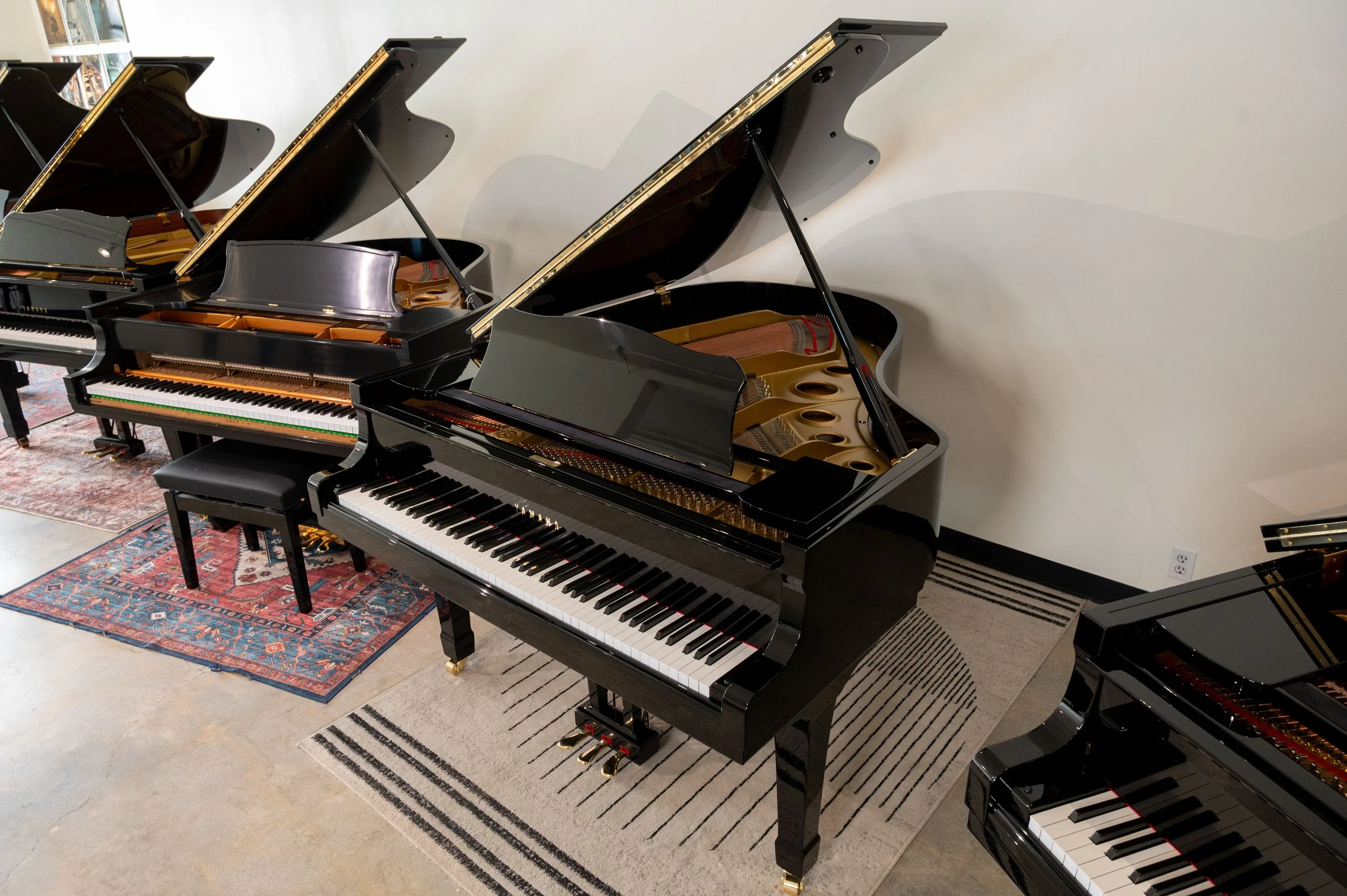
The preparation behind every piano matters, but the final result is what you feel the moment you sit down to play.
Explore our current inventory online or schedule a visit to our Seattle showroom to experience these instruments firsthand.