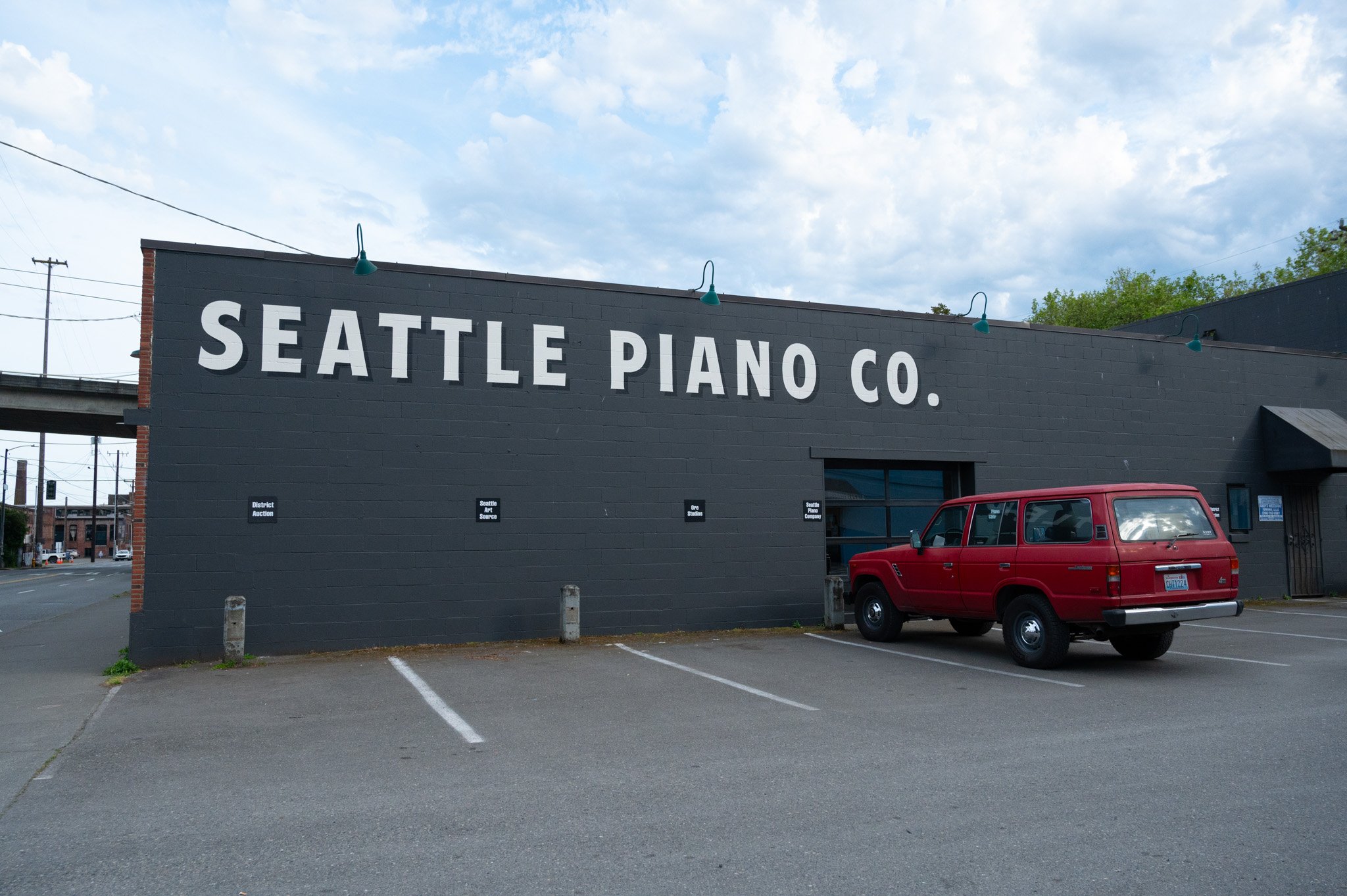
Seattle Piano Company
Seattle Piano Company is a technician-owned Yamaha piano specialist located in Seattle’s Georgetown neighborhood.
We focus on carefully selected and restored Yamaha pianos sourced both locally in the Pacific Northwest and through long-standing partnerships with refurbishing facilities in Japan.
Our inventory ranges from newer Yamaha models to high-end domestic-market uprights and grands that were never officially available in the United States.
Every piano is inspected, prepared, and detailed in Seattle before delivery, with an emphasis on long-term musical performance, consistency, and overall quality.
While we have built a strong local reputation throughout the Pacific Northwest, we also work extensively with out-of-state buyers seeking access to rare and carefully prepared Yamaha pianos.
An Unlikely Start
I never expected to end up in the piano industry.
Growing up, my interests revolved more around playing in bands, motorcycles, and mechanical things than pianos themselves. I played guitar and bass throughout my youth and was always drawn toward the design, performance, and craftsmanship of vintage guitars and amplifiers. Over time, that fascination expanded into vintage motorcycles, restoration work, and anything thoughtfully engineered and built.
Shortly after graduating high school in Colorado Springs, I became obsessed with vintage Vespa and Lambretta scooters after watching the film Quadrophenia. There was a 1960s Vespa parked outside a piano store just a few blocks from my school, and after seeing it there day after day, I eventually walked inside hoping to meet the owner and ask about the scooter.
Instead, I walked into a world that completely changed the direction of my life.
The showroom was filled with polished grand pianos, the smell of wood and lacquer, and a level of craftsmanship I had never experienced before. Somewhere in that first conversation, I ended up leaving with a summer job.
That job became the beginning of my career as a piano technician.
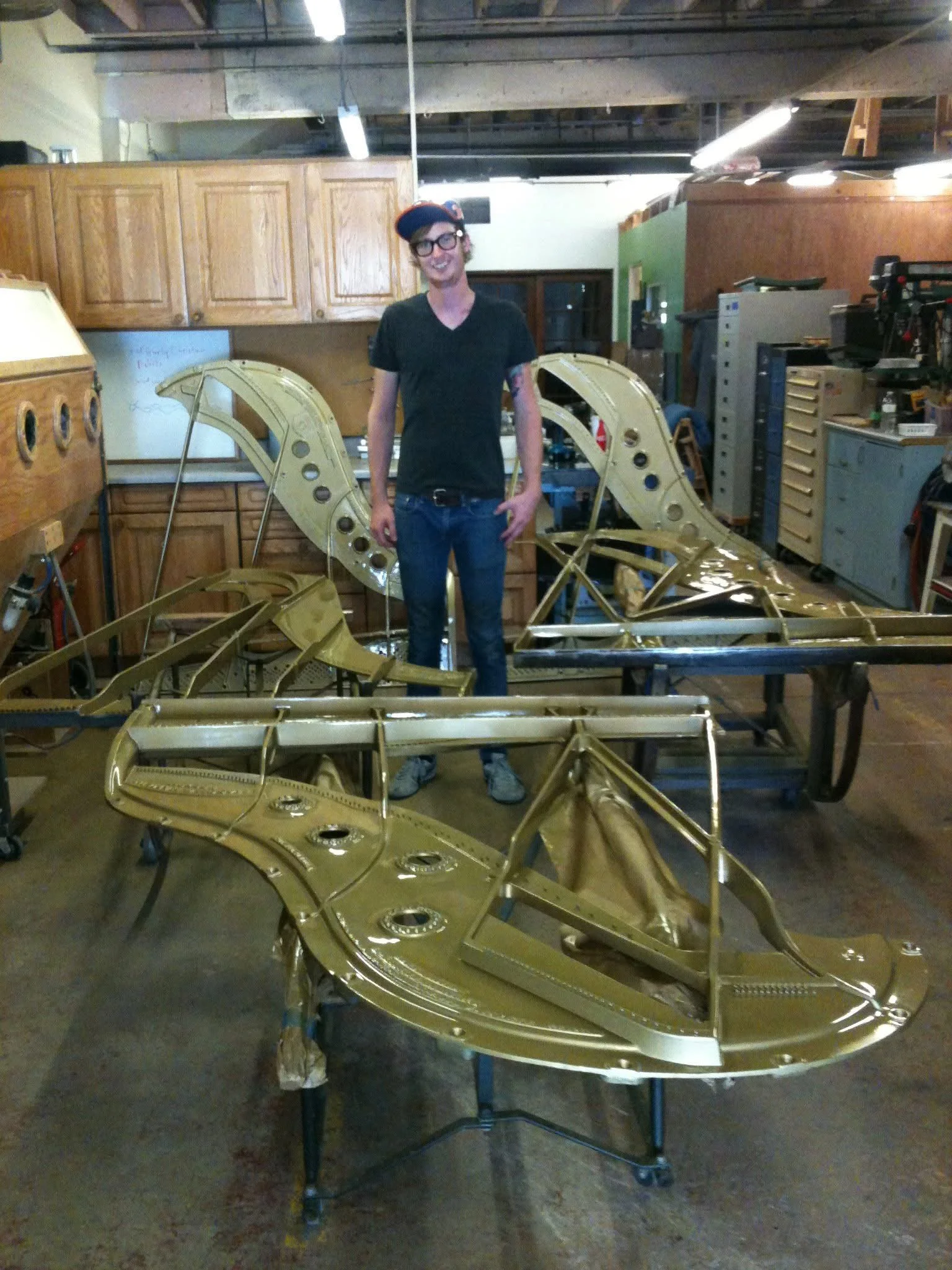
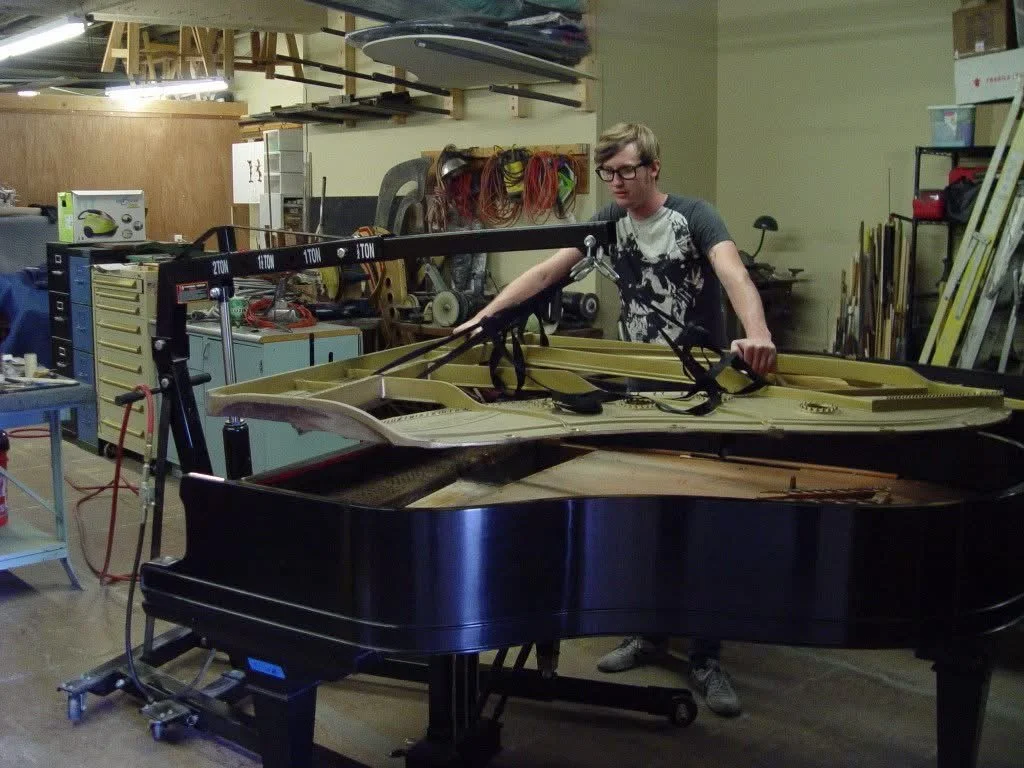
I was fortunate to learn through a true hands-on, ground-up approach rather than through a correspondence course or trade school. My early years were spent polishing brass, cleaning and detailing pianos, assisting with deliveries, and eventually moving into tuning and regulation work. Those years taught me not only how pianos function mechanically, but also how much care and precision separates an average instrument from a truly exceptional one.
When The Standard Became Clear
Working on a wide range of pianos over the years gave me a deep appreciation for how differently instruments are designed, built, and prepared.
Older American pianos often had enormous musical potential, but bringing that potential out could require extensive rebuilding and many hours of detailed restoration work. Newer lower-cost instruments could sometimes be made to play well in a showroom setting, but they often lacked the consistency, durability, and refinement needed for long-term ownership.
Yamaha stood out because the foundation was already there.
The design was consistent. The parts fit the way they were supposed to. Adjustments responded predictably and tended to stay where they were set. When a Yamaha piano was regulated, voiced, and prepared properly, the results were not only excellent, they were repeatable.
Over time, that became impossible for me to ignore.
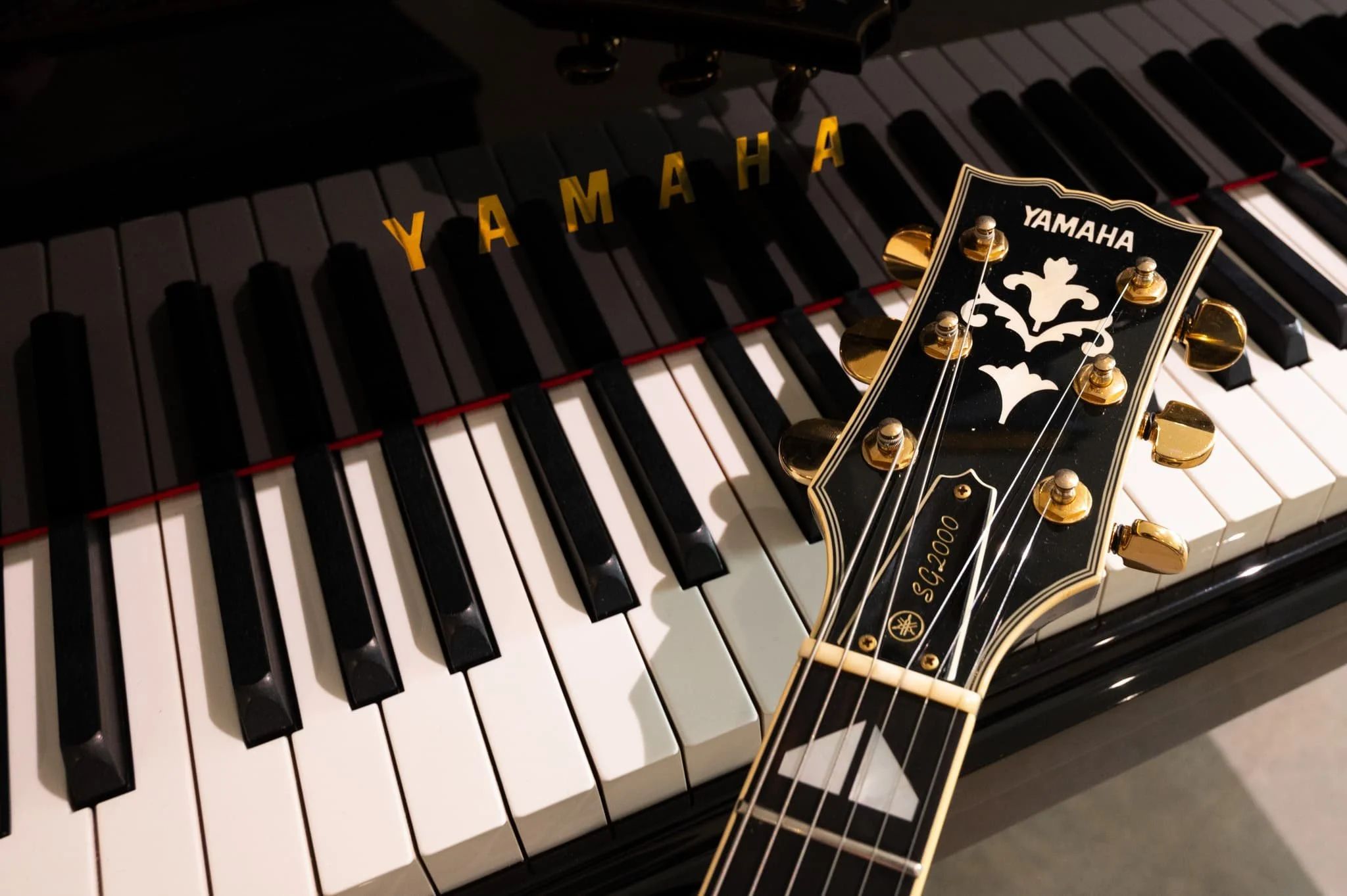
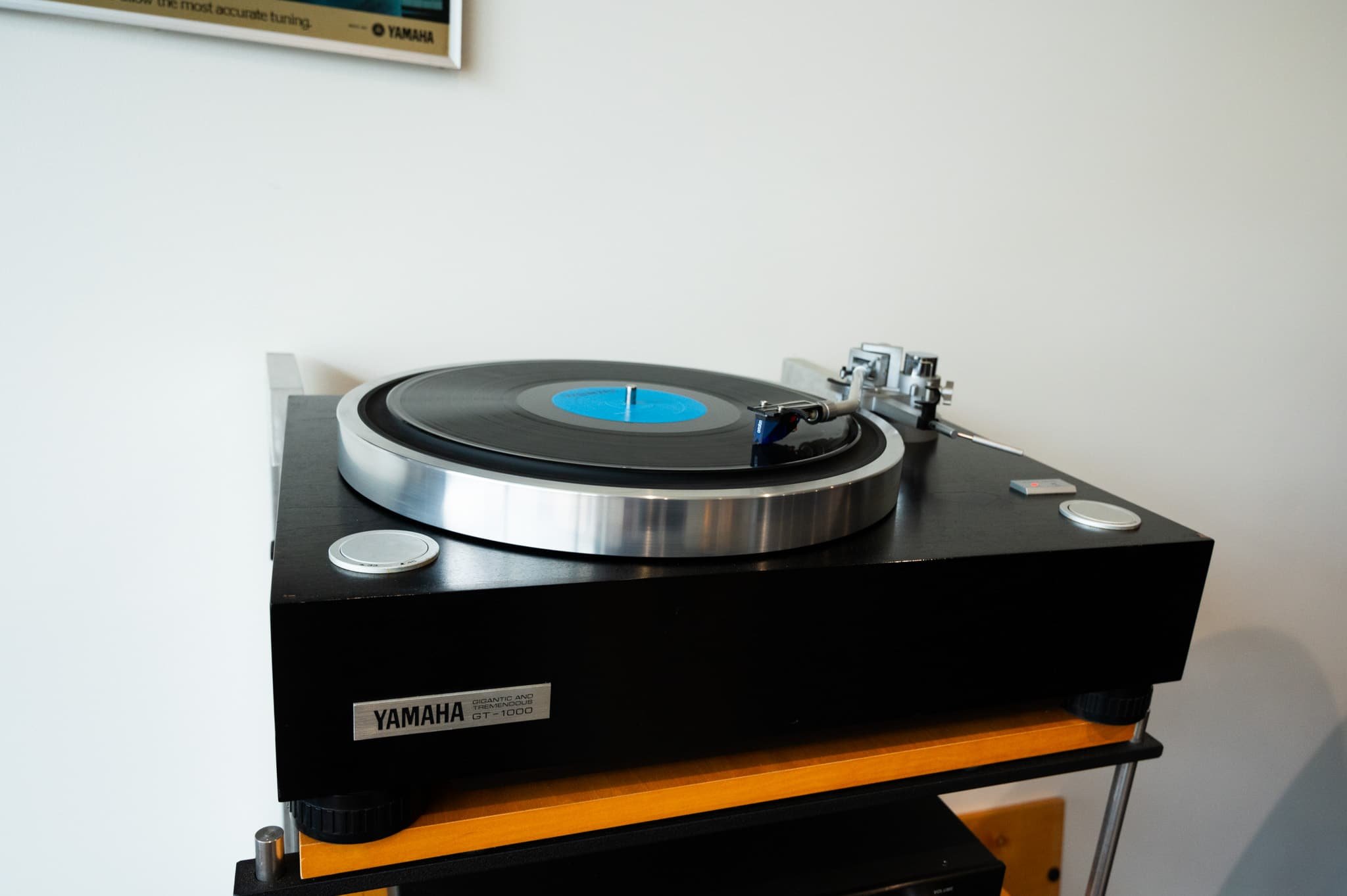
Yamaha’s engineering started showing up in my life outside of pianos as well, from vintage motorcycles to guitars to high-end audio equipment. Every time I looked for the best version of something I cared about, the top-tier Yamaha version seemed to deliver the same qualities I had come to appreciate in their pianos: precision, durability, performance, and thoughtful design.
That broader admiration for Yamaha eventually became the center of Seattle Piano Company.
From Restoration To Specialization
After leaving the Yamaha dealership, I began building Seattle Piano Company around the types of instruments I had become most passionate about. By that point, Yamaha had gone from being one of many brands I worked on to the clear standard I measured everything else against.
In the beginning, I focused heavily on sourcing Yamaha pianos locally throughout the Pacific Northwest and preparing them entirely in-house. That process was incredibly rewarding. There was the excitement of searching for the right instrument, followed by the satisfaction of taking a well-built piano and bringing it to a far higher level of musical performance through detailed voicing, regulation, cosmetic work, and preparation.
The challenge was time.
Preparing pianos to the standard I wanted often required an enormous amount of labor. Even relatively clean Yamaha grands from the 1980s and 1990s could require weeks of work before I felt they were truly ready for a customer.
At the same time, I kept thinking about the Japanese domestic-market pianos I had encountered years earlier and the level of work being done overseas. Eventually, I decided to travel to Japan and meet directly with the companies restoring and exporting these instruments.
That trip completely changed the direction of the business.
I ultimately formed a partnership with a refurbishing facility that shared the same philosophy I had spent years pursuing myself: start with exceptional instruments, prepare them carefully, and never overlook the details that separate a good piano from a truly exceptional one.
Today, Seattle Piano Company works closely with our partners in Japan to source and restore exceptional Yamaha pianos, including many high-end models that were never originally available in the United States. Once those instruments arrive in Seattle, I’m able to carry out the final voicing, regulation, preparation, and detail work that completes the process.
There is absolutely nothing wrong with a brand new Yamaha piano. In fact, I still believe they offer some of the best long-term value and musical performance available today. But Yamaha’s quality and engineering are so strong that these instruments are often capable of delivering exceptional performance for decades, which is where carefully restored examples become incredibly special.
A Better Way To Buy A Yamaha Piano
Seattle Piano Company exists to make exceptional Yamaha pianos more accessible, better prepared, and easier to purchase with confidence.
Whether a piano is sourced locally in the Pacific Northwest or imported through our partners in Japan, the standard is the same: it has to be an instrument we believe in.
Every piano is selected for structural health, musical potential, long-term stability, and overall quality. From there, the goal is to prepare it honestly and thoroughly so the instrument can perform the way a properly set-up Yamaha should.
For local customers, that means access to carefully prepared Yamaha pianos in our Seattle showroom. For out-of-state buyers, it means the ability to purchase a high-quality instrument remotely with clear information, careful coordination, and a delivery process built around protecting the piano.
At the center of all of it is a simple belief: a used Yamaha piano, chosen carefully and prepared properly, can be one of the best long-term values in the piano world.
Chasing Refinement
After spending a few years learning the fundamentals of piano work in Colorado, I moved to San Diego to pursue a deeper level of restoration and rebuilding work. That transition completely changed my understanding of what a piano could become when enough time, care, and precision were invested into it.
Much of the work there centered around high-end American pianos, particularly Steinway and Mason & Hamlin instruments. What began as light regulation and preparation work quickly evolved into complete action rebuilding, custom weigh-off procedures, advanced regulation, and restoration work aimed at bringing instruments to a far higher level of performance than they had originally left the factory with.
The owner of the restoration shop who became my mentor had an enormous influence on how I approach craftsmanship today. He believed deeply in chasing perfection and paying attention to the details most people either overlook or never notice. That mindset became both a blessing and a curse. Once you understand how exceptional an instrument can become, it becomes difficult to ignore the compromises that are often accepted as “good enough.”
Over the years, I worked for several different piano dealers and restoration shops, but I continually found myself struggling with the same tension. I wanted to spend more time refining and preparing instruments than most retail environments realistically allowed. Looking back, I understand why. It is incredibly easy to invest countless hours chasing perfection in a piano, often beyond what makes financial sense.
But throughout all of those years, one thing became increasingly clear to me. Every time a Yamaha piano came across my path, achieving that level of refinement always seemed dramatically more attainable.
A Different Side Of Yamaha
Throughout my career, I would occasionally hear technicians and dealers talking about used Yamaha pianos imported from Japan by the shipping container. The idea seemed almost unbelievable to me at the time, not only that someone could import a full container of pianos from Japan, but that these instruments were supposedly being restored to an extremely high standard before arriving in the United States.
After moving to Seattle and working with the local Yamaha dealer, I finally started seeing some of these Japanese domestic-market pianos appear as trade-ins. Their condition depended heavily on how they had been treated by previous owners, but many of them were noticeably cleaner, more consistent, and better preserved than other used pianos I was encountering regularly.
At the time, much of what I had heard about these instruments centered around the “grey market” label and the supposed problems associated with them. But the reality I was seeing firsthand often contradicted that narrative. Many of the pianos coming through the dealership were exceptionally well-built instruments that had held up remarkably well over time.
The deeper I looked into these Japanese-market models, the more fascinated I became.
I started discovering performance uprights and higher-end Yamaha models that had never officially been sold in the United States. Models like the UX series, YUS series, and other domestic-market instruments offered a level of refinement and performance that many American buyers had simply never been exposed to.
What impressed me most was not just the quality of the pianos themselves, but the philosophy behind them. In Japan, where space is limited and grand pianos are often impractical for many homes, there was strong demand for upright pianos capable of delivering a far more advanced musical experience. Yamaha responded by building some of the most sophisticated upright pianos ever produced.
Those instruments eventually became one of the foundations of Seattle Piano Company.
Shipping Done Properly
As more Japanese-market Yamaha pianos started arriving at the shop, I began receiving calls from customers all over the country. Many of them were searching not only for newer Yamaha models, but for high-end upright and grand pianos that were rarely available in their local markets.
Those conversations eventually turned into nationwide deliveries.
At first, I relied primarily on traditional long-distance piano moving companies. While many of these movers were experienced and capable, the process often involved long wait times, multiple warehouse transfers, and delivery schedules that could stretch out for weeks.
I wanted a more direct and controlled approach.
That led me to begin designing and building heavy-duty custom crates specifically for freight shipping pianos safely across the country. The goal was not simply to move the piano economically, but to create a system that protected the instrument properly while dramatically reducing transit time.
The results completely changed the way I approached nationwide delivery.
Today, many of our pianos are carefully prepared in Seattle, secured inside custom-built crates, fully insured, and shipped directly to a trusted local piano mover in the customer’s area. In many cases, the piano arrives just a few days after leaving our showroom.
For customers purchasing remotely, careful shipping is just as important as careful piano preparation. Both are essential parts of delivering an instrument safely and confidently into its next home.